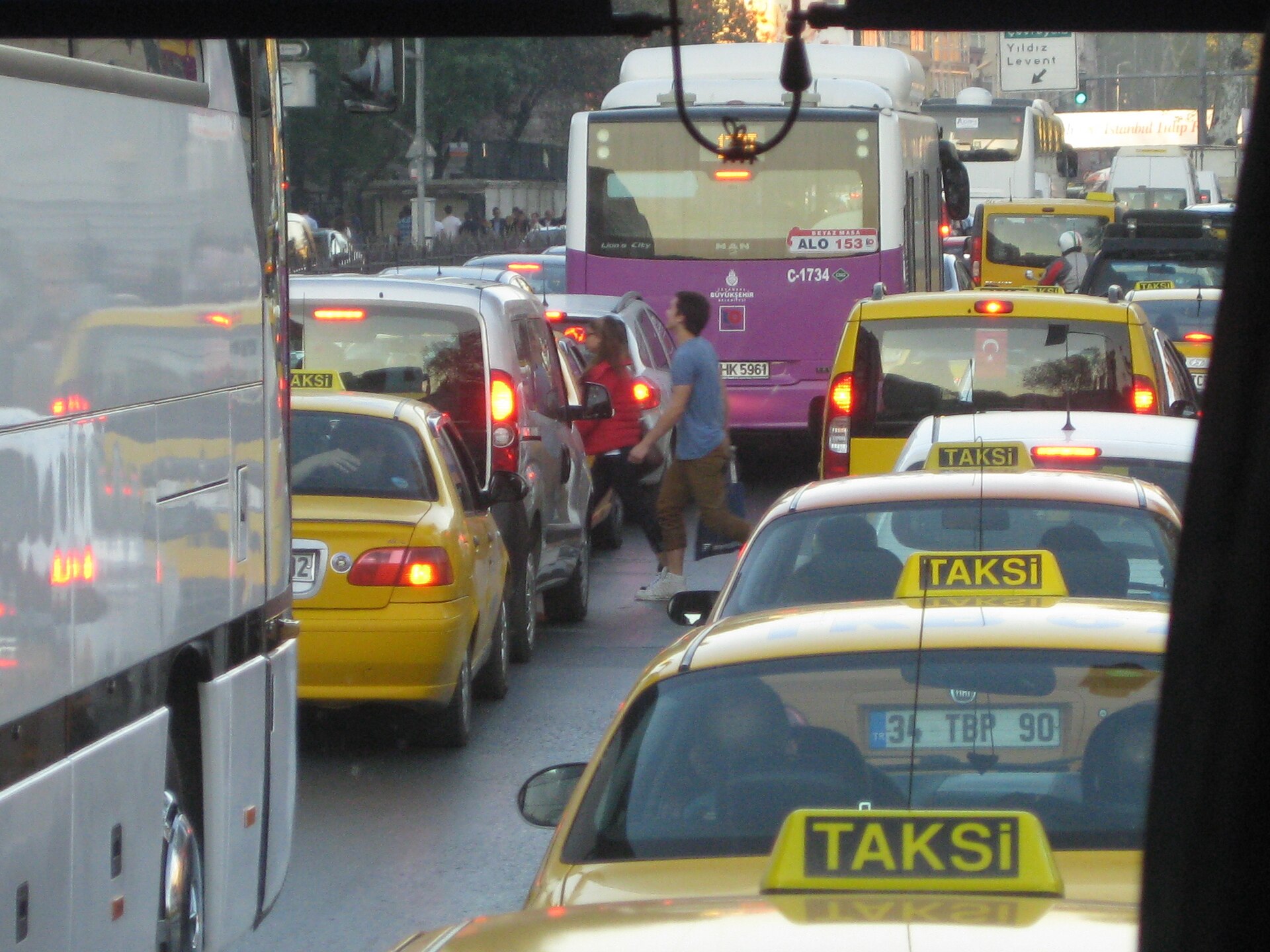
Ask an Istanbul driver how long a trip will take and you will usually get a question back: what time? The same drive can take forty minutes or two hours, and the difference has very little to do with distance. Traffic here is not random, though. It follows patterns, and once you know them you can plan your airport transfer much more confidently.
The weekday rhythm
- Early morning, before about 7 am: generally the easiest time of the day. Roads are open, and both airports are quick to reach.
- Morning peak, roughly 7:30 to 10 am: heavy traffic heading into business districts such as Levent, Maslak and Şişli, and across the bridges toward the European side.
- Midday: usually calmer, though rarely empty. A good window for departures if your flight allows.
- Evening peak, roughly 4:30 to 8 pm: the hardest part of the day. Outbound routes from the centre, the bridge approaches and the main ring roads all fill up.
- Late evening and night: traffic eases, sometimes dramatically, after about 9 pm.
These are tendencies, not timetables. Some days the evening peak starts earlier, some days it lasts until late.
Days that behave differently
Friday afternoons are often the worst of the week, as commuters and weekend travellers leave at the same time. Sunday evenings can be busy with people returning to the city. Saturday and Sunday mornings, by contrast, are among the most pleasant times to drive anywhere in Istanbul.
The things that make everything slower
Rain
Even light rain slows Istanbul down noticeably. Minor accidents become more frequent, and one blocked lane on a bridge approach ripples back for kilometres.
Public holidays and the days before them
The eves of the major religious holidays and long weekends see heavy outbound traffic, especially toward the motorways. During the holidays themselves the city can feel unusually empty.
Events and closures
Big football matches, concerts, marathons and official visits can close roads or slow particular districts. The Istanbul Marathon, for example, closes a bridge for part of the day.
The bridges: where the real bottleneck sits
Any trip that crosses from Europe to Asia, or the other way, goes through one of a handful of crossings: the 15 July Martyrs Bridge, the Fatih Sultan Mehmet Bridge, the Yavuz Sultan Selim Bridge further north, or the Eurasia Tunnel under the sea. These are the points where traffic concentrates. That is why journeys between Sabiha Gökçen and the European side, or between Istanbul Airport and the Asian side, vary the most.
How this affects your transfer
For arrivals, you cannot choose when your plane lands, but you can set expectations. If you land at 5:30 pm on a Friday, assume the longer end of the range and plan dinner accordingly.
For departures, you have more control. We suggest:
- Work back from the time you want to be at the terminal, roughly three hours before an international flight.
- Add the normal drive time for your route.
- Add a generous buffer if you are leaving during a peak, on a Friday, in the rain or before a holiday.
Drivers use live navigation and adjust routes constantly, which helps, but no route avoids a jam that covers every option.
The calm way to think about it
Istanbul traffic is part of the city, like the ferries and the call to prayer. Fighting it is pointless; planning for it is easy. A bit of extra time on the way to the airport costs you a coffee at the gate. Too little time costs you a flight.
When you book a transfer on this site for a departure, tell us your flight time and we can help you choose a sensible pick-up time.
Photo: Ibrahim Husain Meraj, CC BY-SA 4.0, via Wikimedia Commons
Comments 0
No comments yet. Be the first to comment.
Leave a Comment